The Crisis, in five parts
Everything we publish about the crisis, grouped so you know where to click. New readers should start with the two cards below.
Start Here
Where to beginThe 5 OVERs
Where to start if you want to understand Malta's housing crisis. The piece sets out the 5 OVERs, from over-population to over-privatisation, and argues they are five symptoms of one deliberate blueprint rather than five accidents.
DataBy the Numbers
The key numbers behind Malta's housing crisis in one place: prices, rents, permits, population and short-term rental counts, each with its source. Read them as evidence of a political choice, not a market accident.
The Overs
Overpopulation, overtourism, overdevelopmentThe Overs
The cap on Malta's three growth pressures, with every article grouped by the job it does: the problem, the indicators and the repercussions.
ProblemRent Reforms
How Malta's rental market was converted from housing into a high-yield investment model, and why Legal Notice 92 of 2026 does not fix it. Covers the 90-day loophole, the enforcement gap and the 9,300+ short-term rentals eating the residential stock.
ProblemWho's Buying Malta?
Parliament's own answer on who is buying Maltese property: Chinese capital quadrupling its acquisition rate in three years, an SDA black hole with no central register, and a government that publishes the numbers while refusing to connect them to the crisis.
ProblemNo Room for the Dead
Malta grew by nearly 200,000 people in twenty years without ever planning for the dead. This piece follows the cemetery waiting lists, the oversubscribed grave sales and the common-grave cycle to show what happens when population growth and infrastructure are never connected.
IndicatorFollow the Supermarkets
Malta has no population policy, no target, no ceiling. The closest thing to one is the expansion strategy of the supermarket chains, who size new stores for customers who have not arrived yet. The pavement tells you the plan before any minister does.
RepercussionThe Productivity Distraction
When the Chamber of Commerce says growth must shift from volume to value, nobody mentions who built the model or what happens to the foreign-born residents already living in the same crisis. A close reading of the August 2026 deflection, and of what an honest conversation would sound like.
The System
Who holds the powerState Capture
The five forces of the housing crisis look like five separate failures. This page argues they are one machine: the parties, the construction lobby and the regulators operating as an interlocking network, documented in audit reports, court judgments and Ombudsman referrals.
JusticeTwo-Tier Justice
Spray paint on a heritage wall gets you charged. A policy that erases a four-hundred-year-old streetscape gets a ribbon cut. This analysis traces how Article 9 of the Constitution promises heritage protection that no court can enforce.
WatchdogsThe Silent Guardians
A commercial rave is marketed as a party inside a UNESCO World Heritage gem, and the officials meant to guard the site explain why the ditch can take it. This commentary asks what the guardians are protecting when they answer everything except the question.
Local CouncilsYour Council's Real Powers
What a local council can actually do about the tables, barriers and platforms swallowing the pavement. Ten lawful routes, from formal planning representations to bye-laws and joint action with other councils, because forwarding complaints is not representation.
The SystemLawmakers
The Laws slot under The System: our analysis of the 2026 planning bills - Bills 143 and 144 - lands here once the public consultation closes on 18 August.
What We're Losing
Heritage, language, ways of lifeHeritage Demolished
What happens to Valletta's public buildings when residents are not consulted, told through specific cases from the Royal Opera House onward. The pattern repeats: disuse, an expensive-to-maintain verdict, a quiet concession, and a community that gets nothing.
TraditionsTraditions At Risk
UNESCO inscribed the Maltese village festa as intangible heritage while the communities that carry it are being priced out. Locality by locality, from Valletta's collapsed resident base onward, the piece counts what displacement costs a tradition.
LanguageLinguistic
How gentrification hollows out a language: local words adopted as branding, 'local character' commodified for visitors, and the original speakers priced out. The piece sets Malta's situation against sociolinguistic research and asks what genuinely resists language shift.
UNESCOThe UNESCO Clock
Malta has until 1 December 2026 to show UNESCO what it actually did to protect Valletta. This tracker separates completed measures from those that are merely claimed, holding the state to the standard of published, verifiable evidence.
Stories
Voices from the groundVoices & Testimonies
Documented testimonies from the people living inside the numbers: tenants, a housing agent, an iGaming worker, an expat renter. Every quote is attributed to its source, because behind every statistic is somebody's rent.
MarsaskalaMarsaskala: A Village Under Siege
Marsaskala in 2026: a fast-ferry terminal waved through without a full environmental assessment, mass events, and a bay with protected seagrass. The story of one village absorbing decisions made elsewhere, told with the documents and the residents' own words.
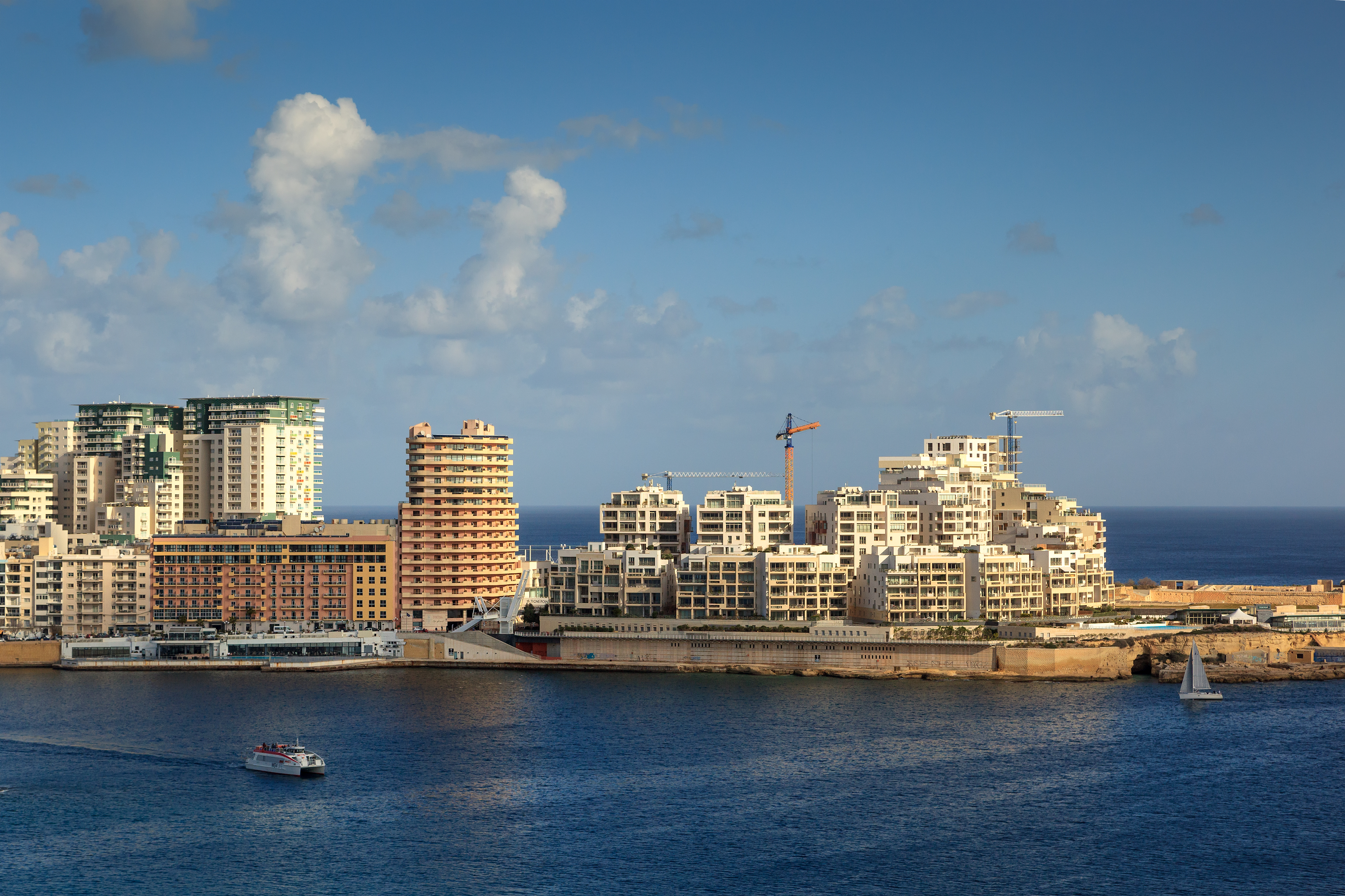
Malta has long been called the jewel of the Mediterranean. The Maltese themselves are being driven out of it. Walk down any street in Sliema or Paceville and count the cranes. Then ask a 28-year-old Maltese nurse or teacher whether they can afford to rent where they grew up. That gap - between record construction and record unaffordability - is not a market failure. It is the predictable result of five deliberate political choices. We call them the 5 OVERs.
Opening Frame
The five forces driving Malta’s housing crisis are not accidents, market failures, or the unintended consequences of growth. They are five symptoms of one deliberate blueprint - designed by a small network of business interests operating across both PN and PL governments, prioritising developer profit over the welfare of Maltese residents.
Neither PN nor PL fixed the infrastructure before expanding the population. Roads, sewers, schools, hospitals, water capacity - none of it was scaled up first. The carriage came before the mule. And when the bus was already full, they kept boarding people. Then they approved another tower.
These are not five separate problems. They are five levers of the same machine.
Force 1 - OVER-POPULATION
Malta did need some inward migration. Hospitals, elderly care, construction, transportation, supermarkets - essential roles, genuine need.
What was not needed was the mass importation of cheap labour for non-essential industries: low-grade tourism hospitality, where the news today is about fewer visitors of higher quality, not more. That second wave served a specific business class - people with close ties to both PN and PL governments - who were not satisfied with Maltese people saving and spending their money wisely. They wanted more. They got governments willing to deliver it.
Read this before the numbers below. What follows is a critique of policy choices, not of the people who came to Malta. Workers, students and families who moved here are residents like anyone else, and many are themselves squeezed by the same rents, overcrowded flats and tied visas. The problem is a government that imported labour for specific industries without building the housing, transport or schools to match. Foreign-born and Maltese-born residents share the same crisis, and the fix has to apply to everyone equally.
The result: Malta’s foreign-born population grew fourteen-fold in just 19 years - from 12,112 (3% of the population) in 2005 to 173,700 (31%) by 2024. That is not a gradual demographic shift. That is a structural rupture - and it was not accidental.
And this happened on top of a country that was already the most densely populated in the European Union before any of it began.
Malta is more than three times denser than the next EU country, and roughly sixteen times the EU average. Sources: Eurostat, PopulationPyramid.net.
The Golden Passport Factor
Layered on top of worker migration was something more deliberate: Malta’s Individual Investor Programme, introduced in 2013, offered EU citizenship to wealthy foreigners investing €600,000 to €750,000. On 29 April 2025, the European Court of Justice ruled the scheme illegal (Case C-181/23). The programme ended - but thousands of passport holders remain, and the demand they created did not vanish.
The Malta Permanent Residence Programme (MPRP) continues: property purchases of €375,000 or annual rents of €14,000 buy residency. These thresholds are beyond the reach of most Maltese families - which means every foreign investor granted residency through property purchase is competing for the same housing that working families need.
The forward signal: thousands of units sit unsold or investor-held, yet property approvals accelerate. The pipeline is not responding to current demand. It is being built for a population that has not arrived yet - one that governments and developers are actively planning to import. The infrastructure was never fixed for the people already here. It is still not being fixed. The bus is still boarding.
“Between 2012 and 2022, Malta experienced net migration of 117,259 persons. The foreign population grew five-fold, rising from 23,365 in 2012 to 137,376 in 2022.”
- National Statistics Office Malta, 2024
Force 2 - OVER-TOURISM
Malta welcomed 3.56 million tourists in 2024 - more than six times its resident population, and 29% above the 2019 level that everyone assumed was the ceiling. The first nine months of 2025 alone hit 3.08 million.
Tourism is not the problem. Unregulated, uncontrolled, infrastructure-blind tourism is. Every flat converted to a tourist let is one fewer home for someone who lives here.
Approximately 10,000 properties are listed on Airbnb and VRBO. In Valletta, 1 in 5 liveable dwellings is now a short-term rental. The licensing question is secondary. Even if every operator were fully licensed and tax-compliant tomorrow, those are still 10,000 homes pulled out of the residential stock on an island that is already the most densely populated in the EU. Capacity is the ceiling, not paperwork - and the country crossed it years ago. Enforcement is failing on its own terms too - 46% of Airbnb listings in Gżira are unlicensed, 30% in Sliema, 28% in St Paul’s Bay, with authorities identifying only 177 illegal operators in all of 2025 - but licensing every flat would not return a single one of them to a family that needs to live there.
On tourism: Nobody is proposing to abolish tourism. The framework targets illegal operators and proposes the same tools - platform data sharing, licensing, night caps - already used in Amsterdam, Barcelona, and the Balearic Islands. All are tourism-dependent economies that acted, and survived. The “tourism feeds us” argument conflates 15% of GDP with a licence to destroy the housing stock. You can have a tourism industry without sacrificing 1 in 5 homes in your capital city.
Force 3 - OVER-DEVELOPMENT
Here is the paradox developers do not want you to notice: Malta builds more new housing per capita than almost any European country. And prices keep rising. How?
Because Malta’s property market is not a normal consumer market. Nearly half of all property purchase permits in 2025 went to foreign investors - Chinese nationals alone accounted for 46.4% of investor purchases, up four-fold since 2021. These buyers do not purchase to live in. They buy to hold or to rent short-term for tourism. In a speculative asset market, new supply generates new investor demand rather than reducing prices.
More critically: thousands of units sit unsold or investor-held, yet approvals accelerate. This is not a market responding to existing demand. It is infrastructure being built for a population not yet here - one that governments and developers are actively planning to import. Over-Development and Over-Population are not two separate problems. They are a coordinated strategy.
Mega-projects have reshaped entire communities:
- Mercury Tower (Paceville/St Julian’s) - a 28-storey Zaha Hadid-designed tower, one of Malta’s tallest buildings, rising in a district already under severe housing stress
- DB Group Towers (Pembroke) - luxury residential and commercial complex that triggered years of legal battles and mass protests
- Fort Cambridge (Sliema) - 31-storey mixed-use development on one of Malta’s most densely built waterfronts
- Portelli developments (Gozo and Malta) - approved despite court rulings, with fines set at levels that are operationally meaningless
The Sanctioning Scandal
In September 2025, the Court of Appeal ruled a Portelli development in Sannat, Gozo was illegal. The Planning Authority sanctioned it anyway. The fine: €150. Outstanding planning fines across Malta stand at €16.5 million as of January 2026 - virtually unenforced, no liens, no asset seizures, no work stoppages.
That is not a regulatory system. It is a permission system.
With 95% of Malta now classified as urban, there is no countryside left to sacrifice. Every new tower is permanent. Every heritage building demolished is gone forever.
Force 4 - OVER-COMMERCIALISATION
Housing in Malta has ceased to function as a social good. It has been fully converted into a financial asset - and Maltese people have been priced out of their own country.
The price-to-income ratio tells the structural story: 7× in 2000. 11× in 2020. 14.5× today. A two-bedroom flat now costs fourteen and a half years of a median salary.
| Household Type | Annual Income | Affordable Properties |
|---|---|---|
| Couple (average income) | ~€35,000 | ~33% of market |
| Couple (minimum wage) | ~€21,000 | ~2.2% of market |
| “Stretched class” | €24,000 - €38,000 | Ineligible for social housing; cannot afford market rates |
The average first-time buyer is 30 years old - if they can buy at all. One in three relies on family assistance for the deposit. Young Maltese are living with their parents into their 30s, delaying marriage and children, or leaving altogether.
Rents have risen 28% above recent averages. In popular areas, monthly rents run from €1,100 to €2,800. The state social housing company, Malita, ran out of money in November 2025. Real estate sales hit €320M+ in a single month (May 2025).
Denied a home for being Maltese. This is a regulatory failure, not a complaint about who lives in Malta. Tenant protections and enforcement should apply equally to everyone. A MaltaToday investigation (21 September 2025) confirmed what residents had been reporting for years: landlords are openly refusing Maltese tenants. The Housing Authority’s own study found that only 10% of tenants are Maltese, while 97% of landlords are. One real estate agent told the paper that landlords prefer foreigners because “landlords can do what they please with foreigners.” Paul Mifsud, Chief Lettings Officer at Alliance Real Estate, cited “lengthy judicial proceedings” against Maltese tenants as the reason. James Paris, director at Pelago, confirmed landlords have “more control” over third-country nationals because their employer-tied visas require a fixed registered address. The rental market has reorganised itself around tenants who cannot say no. Maltese citizens, in their own country, are now the disfavoured class. Source: MaltaToday, 21 September 2025.
On the “economic miracle”: Malta’s GDP per capita of €39,350 is frequently cited as proof of success. But GDP measures output, not welfare. The average net salary is approximately €1,416 per month. GDP is inflated by iGaming profits flowing to foreign shareholders, financial services revenue routed through Maltese shelf companies, and property transaction volumes that enrich agents and developers. When governments cite Malta as an economic miracle, ask: whose miracle?
Commerce, Clutter, and the Landfill
Commercialisation does not stop at housing. It extends to the everyday environment that residents are forced to live inside. Public space - gardens, squares, pavements, bus interiors, the surfaces of buildings - has been progressively colonised by advertising. Letterboxes are filled with unaddressed flyers nobody asked for. Promenades are framed by branded umbrellas and sponsored signage. The line between a public park and a marketing surface has all but disappeared.
Behind this visual saturation is a manufacturing chain that depends on residents buying more than they need. Single-use plastics, throwaway fashion, packaging engineered to be discarded within minutes - the model requires the customer to be persuaded that next week’s purchase is essential. What gets bought is a fraction of what ends up in the bin.
The bin is where the model breaks. Malta now generates around 574 kg of municipal waste per resident per year - among the highest in the EU and well above the EU-27 average of roughly 513 kg. 79.2% of all waste is sent to landfill (2024), up from 78.6% the previous year - the country is going in reverse. The Magħtab/Għallis non-hazardous landfill has roughly 300,000 cubic metres of remaining void space, described by national authorities as “the most significant waste management issue at the national level.” The promised waste-to-energy plant has been delayed since 2017; the 2026 budget allocated no funds for construction; the third tender collapsed.
Over-Tourism makes the picture worse. In Sliema, Gżira, St Julian’s, Swieqi, and along the Valletta seafront, short-let tenants who never receive the local waste schedule put bags out on the wrong day. The bags pile on pavements, are torn open by rats, and stay there until the next collection. Tourists photograph the seafront with garbage at their feet. The collection schedule was never designed for districts that swap their occupants every three nights.
The same logic plays out in textiles. Clothes bought to be worn a handful of times go to the same landfill, in the same bags, pulled out by the same rats. Malta has almost no upcycling, repair, or second-hand culture at the scale the country actually needs - the model assumes the cheapest answer is to throw the old item away and buy the next one. The result: a small island that imports almost everything it consumes, and has nowhere left to put what it discards.
Force 5 - OVER-PRIVATISATION
The Planning Authority is not a regulator. It is a permission service for developers.
Public land, public institutions, and public decision-making have been systematically transferred into private hands - leaving Maltese residents without recourse. Malta dropped to 65th place on Transparency International’s Corruption Perceptions Index in February 2025 - its lowest-ever ranking. This is not abstract. It is the context in which every planning decision is made.
Over-Privatisation is not only visible in planning. It is visible in the fabric of daily Maltese life:
- Public workers passed to private contractors - job security stripped, wages suppressed, accountability diffused
- Mater Dei and public health services incrementally handed to private entities - healthcare reframed from a citizen’s right to a consumer’s purchase
- Malta Post transferred to private hands - a national institution converted into a logistics profit centre
- Public land sold or leased long-term to developers at below-market value - generational assets liquidated for short-term revenue
- Public squares, foreshore, and historic buildings concessioned to commercial operators - the Evans Building handed for a 65-year hotel concession; Manoel Island only released from MIDI’s 99-year concession at a €47.3 million taxpayer bailout (2026); the proposed Noma Island floating beach club seeking semi-permanent occupation of public maritime space
- Outdoor catering, billboards, and amplified-music permits routinely issued in residential streets - private commerce given priority over the right to walk, sleep, and breathe in your own neighbourhood
The pattern is consistent: anything that was once collectively owned - built by Maltese taxpayers, maintained by Maltese workers, intended to serve Maltese residents - has been systematically identified as an opportunity for private extraction. The state did not shrink by accident. It was deliberately hollowed out, sector by sector, contract by contract, by governments of both colours.
Privatisation does not stop at ownership. It reaches into the air, the sound, and the light of every home. When a private contractor wins a Planning Authority permit, the noise of jackhammers, the dust, and the obstructed view become a private decision that residents are required to absorb. When a commercial operator opens an amplified-music venue beside a residential block, the sound passes through walls into bedrooms and the regulator does not act. When LED billboards and floodlit cranes turn night into day along main arteries, the light enters windows and the planning system has no objection.
The result is a daily life dictated by whoever holds the permit. Residents commute through commercial noise, socialise under private floodlights, and try to sleep through construction and music that begin when the contractor decides and end when the operator decides. Mental and physical health become costs that fall on residents instead of on the businesses making the profit. The right to a quiet, dark, undisturbed home - which any functioning planning regime treats as a baseline - has been quietly converted into a permission that the permit holder can override.
The Planning Authority’s behaviour is not an anomaly. It is the logical endpoint of a political culture that decided, long ago, that public goods exist to be privatised.
The evidence in planning alone is structural:
- A Planning Authority stacked with political appointees who approve nearly everything and issue €150 fines for developments that defy court rulings
- A revolving door between planning regulators and the industry they regulate - officials who approve developments one year are employed by developers the next
- €16.5 million in unpaid planning fines - no liens, no asset seizures, no work stoppages
- Bills 143/144 (2025) - a developers’ wishlist that would have stripped public appeal rights and transferred planning power to builders; mass protests forced a partial retreat, but the underlying intent remains
- Malta is the only EU country where a journalist - Daphne Caruana Galizia - was assassinated (2017) for investigating corruption at the highest levels; a public inquiry found the state bore responsibility for her death
“The system isn’t broken. It’s working exactly as designed - for developers.”
In July 2025, the UNESCO World Heritage Committee formally rebuked Malta, demanding an overhaul of planning policy for Valletta’s setting. The deadline: December 2026. If Malta fails to demonstrate meaningful reform, the World Heritage designation itself could be under threat. International pressure is now working where domestic accountability has failed.
On “just enforce existing laws”: Labour has governed since 2013 - thirteen years. The result: €16.5M uncollected, 177 illegal STRs identified out of thousands, a Chief Justice ruling overridden, and the worst corruption score in Maltese history. The laws were designed to be unenforceable, the fines set too low to deter, and the Planning Authority structured so that the people who would enforce are appointed by the people who benefit from non-enforcement. Enforcement without structural reform has had thirteen years to work. It has not worked.
The Outcome - OVER-GENTRIFICATION
When all five forces operate simultaneously and unchecked, the result is Over-Gentrification - the systematic displacement of Maltese residents from their own communities, their own capital city, and their own economic future.
Young Maltese priced out of their localities. Elderly residents displaced from lifelong homes by construction dust and noise. Families living with parents into their 30s, delaying marriage and children, or leaving altogether. Towns and villages converted into serviced districts for wealthy foreigners and tourists. A capital city whose UNESCO World Heritage status becomes a marketing tag rather than a living obligation.
This is what gentrification looks like at the scale of an entire country. An island once described as the jewel of the Mediterranean has been quietly redesigned - by both colours of government, in the interests of a small network of developers, investors, and political appointees - into a serviced district for people who do not live here. Population, tourism, development, commercialisation, privatisation: the five forces are the design. Over-Gentrification is the result.
This is not the unintended consequence of success. It is the cost that was decided - without your consent - to be acceptable.
The Human Cost
These are not policy abstractions.
Miriam Pace, 54, died on 2 March 2020 when her family home in Ħamrun collapsed due to adjacent construction works. Jean Paul Sofia, 20, died on a construction site in Kordin on 3 January 2022. A public inquiry found the Maltese state bore responsibility for his death - an inquiry his mother, Isabelle, had to fight for, after the government initially refused. In June 2025, a Paceville building collapsed again, linked to the failure to act on the Sofia inquiry’s recommendations.
In March 2026, the president of the Malta Chamber of Geologists, Dr Peter Gatt, told The Malta Independent on Sunday that Malta is the only EU country with neither a National Geological Service nor legal recognition for geologists as a profession. The Planning Authority issues building permits with no obligation to assess the ground itself. The Building and Construction Authority refused the Chamber’s application to be recognised as a stakeholder in the industry. The Sofia inquiry’s recommendation - that a geologist’s report should precede any excavation - has not been acted on. Gatt also flagged the 2022 official geological map, which reclassified the Ħamrun and Santa Venera strata as Lower Globigerina (a stronger rock) where the 1993 map had recorded the weaker Middle Globigerina - the same area where, in early 2026, residents had to be evacuated for ground movement.
These are the lives that Over-Privatisation costs. These are the people the system has decided are acceptable losses.
Summary: The 5 OVERs
| Force | What it is | Who it serves |
|---|---|---|
| Over-Population | Mass labour importation beyond essential need | iGaming, construction, and financial industry owners close to government |
| Over-Tourism | Unregulated tourist volume destroying housing stock | Short-term rental investors, hospitality lobby |
| Over-Development | Speculative building for investors, not residents | Developers, foreign asset buyers |
| Over-Commercialisation | Housing converted from social good to financial asset | Banks, agents, investor class |
| Over-Privatisation | Public land, institutions, and oversight transferred to private interests | Developers, political appointees |
| Over-Gentrification | The outcome of all five operating together | Nobody who lives here |
The Choice
This trajectory is not inevitable. It is the result of specific political choices. Different choices produce different outcomes. The international models exist. The legislative framework is costed. The civic movement is growing.
The jewel of the Mediterranean does not have to become a country its own people cannot live in. That choice is still open - but the window is closing, permit by permit, concession by concession, generation by generation.
Explore More
- By The Numbers: Every Key Statistic, Sourced and Verified
- Personal Stories: “We Work Hard But Can’t Afford a Home”
- The 5-Pillar Framework for Solutions - and How It Pays for Itself
Continue Reading
Valletta's Vanishing Heritage
The Royal Theatre, Fort St. Elmo, Evans Building - the landmarks being privatized or left to decay while developers build over the city's soul.
DataThe Numbers Behind the Crisis
Every key statistic sourced and verified. Property prices, building permits, STR violations, governance failures.